The short answer
The snake game began with Blockade, a two-player arcade game released by Gremlin Industries in 1976, in which each player's line grew behind them and the first to crash lost. It became one of the most played games in the world when Nokia put Snake on its 6110 phone in 1997, and it went massively multiplayer in 2016 with Slither.io. Snake games today, Sleaker included, keep the same rule: grow, and don't hit anything.
Key takeaways
- 1976: Gremlin's arcade game Blockade introduced the growing line you must not crash into.
- 1982: Nibbler put a snake in a maze that grows as it eats.
- 1997: Snake on the Nokia 6110 made it one of the most played games ever.
- 2016: Slither.io put many players' snakes in one online arena.
- Today: snake goes 3D, with cameras behind the head and worlds with walls.
In this post
Who invented the snake game?
The idea comes from Blockade, an arcade game released by Gremlin Industries in 1976. Two players each steered an arrow that left a solid line behind it. The lines kept growing, the screen kept filling up, and whoever crashed into a line first, their own or the other player's, lost the round.
There was no food and no score for eating yet, but the core of every snake game was there: you are a line that grows, and the only rule is not to hit anything. Blockade was quickly copied for arcades and home consoles, and the trail-dodging idea later showed up in the light-cycle races of the Tron arcade game.
How did snake become a game about eating?
In the late 1970s and 1980s the idea moved from two-player duels to single-player games where the line was a creature that grew by eating. Nibbler, an arcade game from Rock-Ola in 1982, put a snake in a maze full of food: every bite made it longer and harder to steer. On home computers, snake games were short enough to be typed in from magazine listings and became a classic first program for people learning to code.
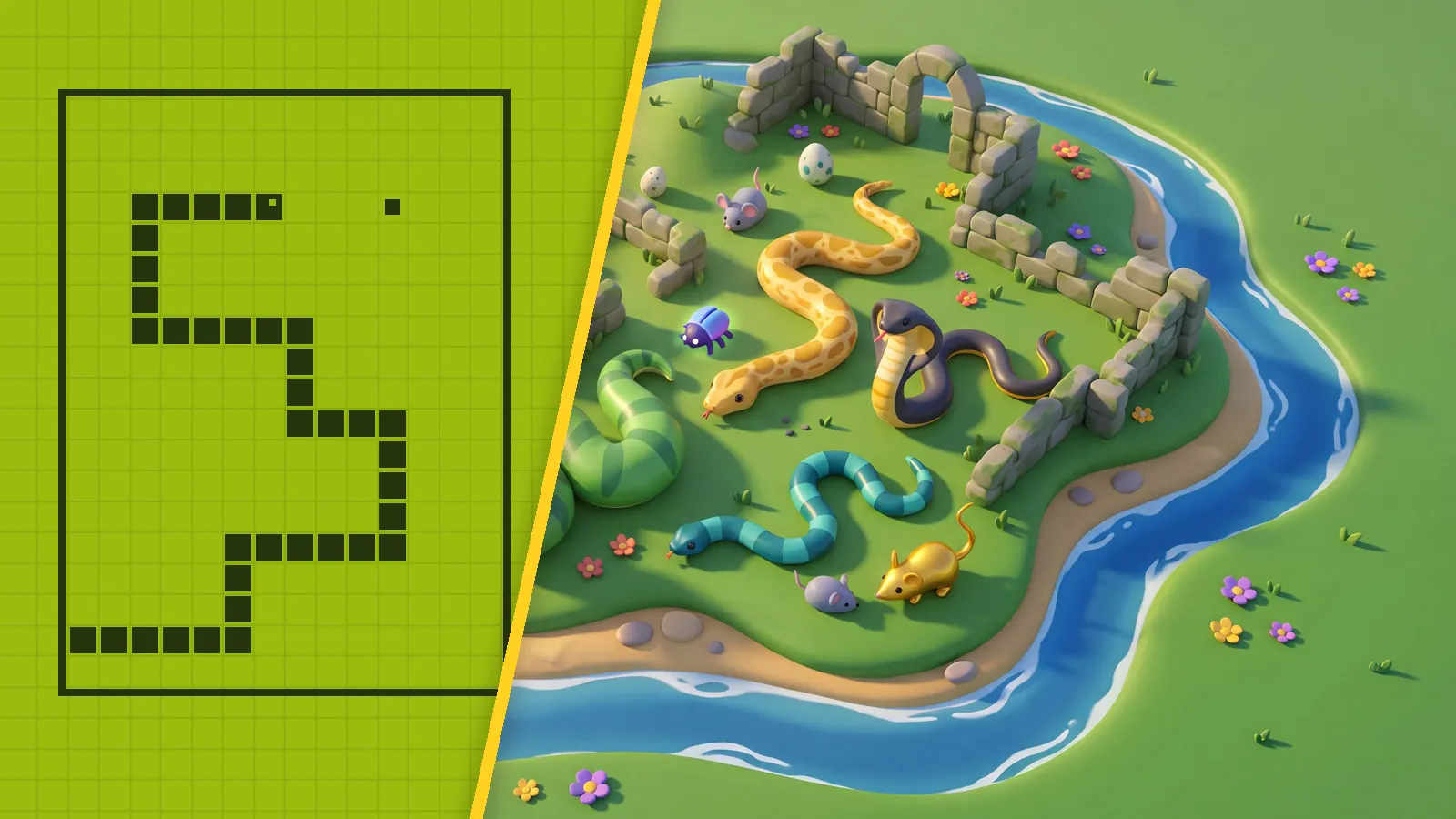
The single-player version settled into the form most people know: a snake on a grid, food appearing one piece at a time, each bite adding a segment, and the game ending when the snake hits a wall or itself.
Why was Nokia Snake so popular?
In 1997 Nokia put Snake, programmed by Taneli Armanto, on the Nokia 6110. It wasn't the first snake game, but it was the one that came free on the phone in your pocket, and Nokia went on to put Snake on hundreds of millions of phones. It needed only the number keys, and a round fit into a bus stop or a queue. Later Nokia phones carried new versions of it, and for a generation of people, "snake" simply meant the game on their phone.
It also showed something every mobile game has learned since: short rounds, simple controls and instant restarts keep people coming back.
How did snake games go online?
For thirty years, snake was a game you played alone or against one friend. That changed with the browser games of the mid-2010s. Agar.io (2015) showed that crowds of strangers could share one simple arena in a browser tab, and it started the .io game wave.
Slither.io, made by Steve Howse and released in 2016, brought snakes into that arena. The rules flipped in an interesting way: you could cross your own body freely, but if your head touched another snake's body, you died and burst into glowing food. Suddenly the most dangerous thing on screen wasn't a wall but another player, and the best way to grow was to make someone else crash. It was one of the biggest games of its year, on the web and on phones, and it spawned a whole family of games like Slither.io.
What changes when snake goes 3D?
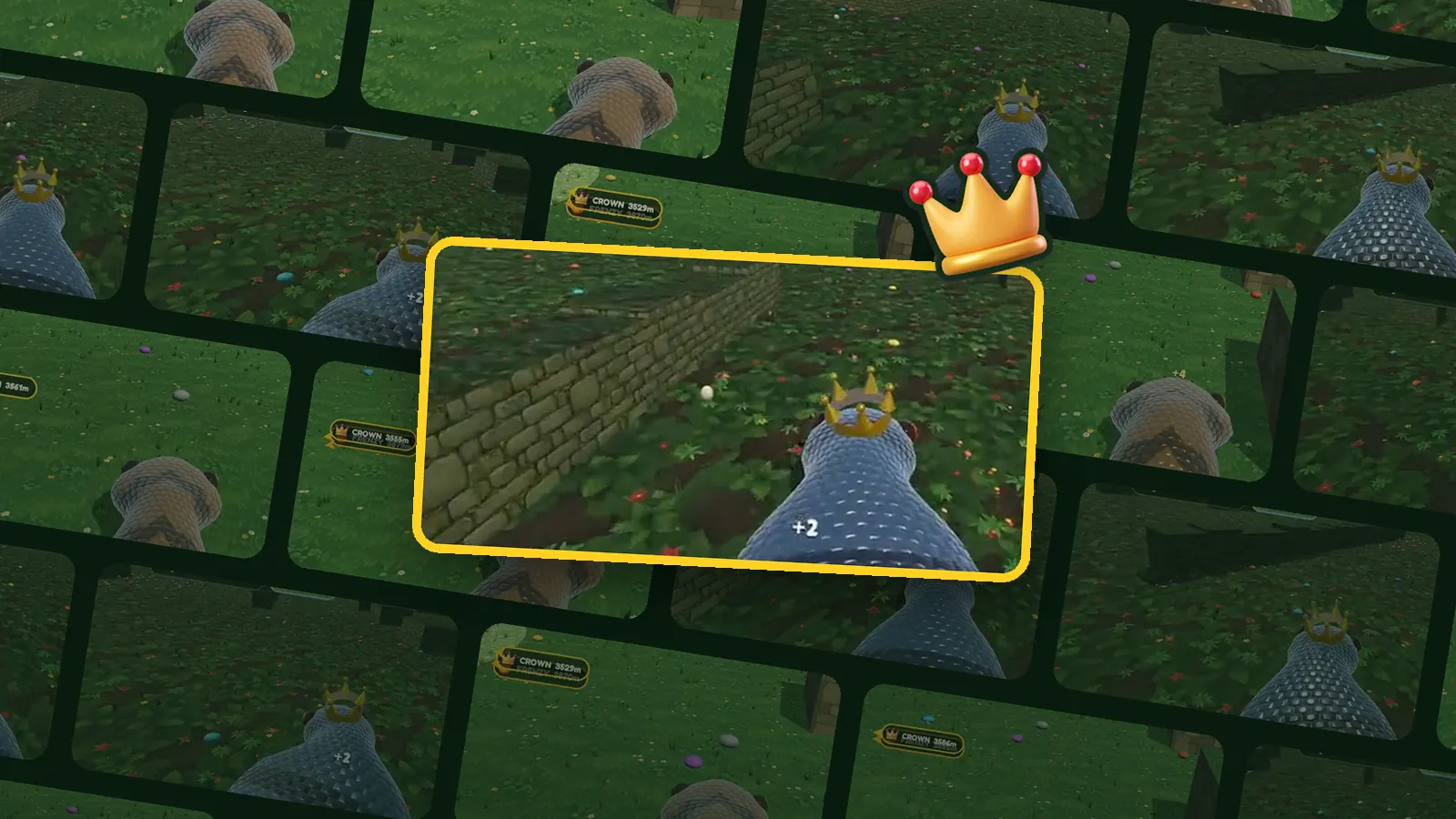
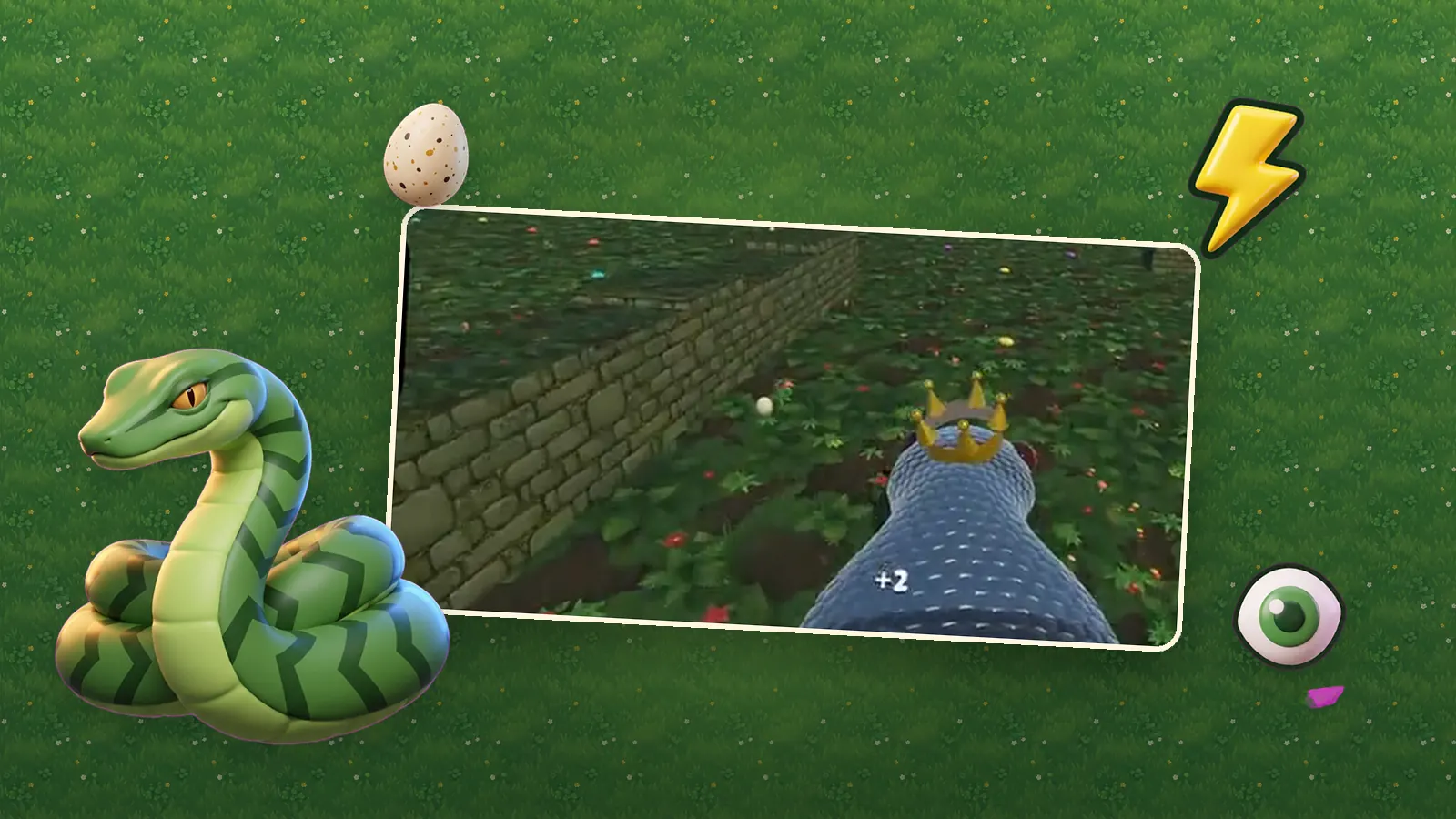
The classic snake game is seen from above, and so are most .io snake games: you see the whole arena around you. Moving the camera down behind the snake's head changes the game:
- You can't see everything. Walls, hills and corners hide what's behind them, so ambushes become possible.
- Turning feels different. You steer from the snake's point of view, not on a map.
- Size feels real. A giant snake looks giant when it passes in front of you.
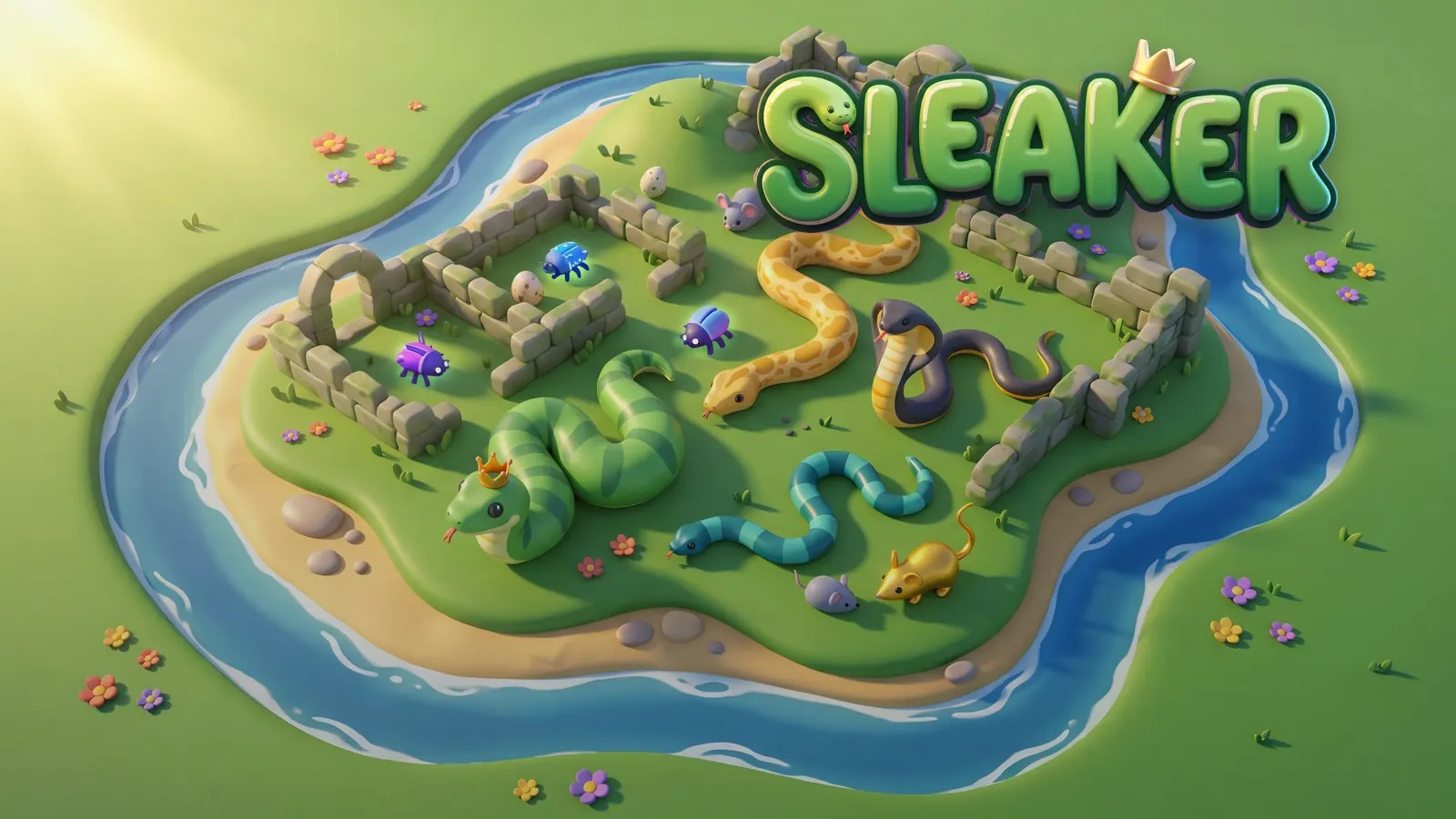
That's the version of snake we make. Sleaker puts every player on one 3D island with ruined walls, a chase camera behind your head, hunger that shrinks big snakes, tail bites and feeding frenzies. The rule hasn't changed since 1976: grow, and don't hit anything.
Timeline of the snake game
| Year | Game | What it added |
|---|---|---|
| 1976 | Blockade (Gremlin Industries) | The growing line you must not crash into |
| 1982 | Nibbler (Rock-Ola) | A snake in a maze that grows as it eats |
| 1997 | Snake on the Nokia 6110 | Snake in everyone's pocket |
| 2015 | Agar.io | Crowds of players in one browser arena |
| 2016 | Slither.io | Snakes in that arena: crash into others, not yourself |
| 2026 | Sleaker (in testing) | A shared 3D island with walls, hunger and tail bites |
Why does the snake formula still work?
Because it's one rule that everyone understands in seconds, and that rule creates its own difficulty. The better you play, the longer you get, and the longer you get, the harder it is not to hit something. Every success makes the next moment riskier. Fifty years on, that's still the whole game.
Frequently asked questions
Who invented the snake game?
The snake game grew out of Blockade, a two-player arcade game released by Gremlin Industries in 1976. Nokia's famous version was programmed by Taneli Armanto in 1997.
When did Snake come out on Nokia phones?
Snake first appeared on the Nokia 6110 in 1997, and later Nokia phones carried new versions of it.
What was the first snake game?
Blockade (1976) is generally credited as the first, with growing lines that players had to avoid crashing into. Nibbler (1982) was an early arcade game where a snake grew by eating.
When did Slither.io come out?
Slither.io was released in 2016. It put many players' snakes into one online arena, where touching another snake's body with your head ends your run.
Is there a 3D snake game for phones?
Yes. Sleaker is a 3D multiplayer snake game for iPhone, iPad and Android, with a camera behind your snake's head and an island full of walls. It is in testing and coming soon.

Free on iPhone, iPad and Android
Hunger never sleeps.
Sleaker is coming soon to the App Store and Google Play. Free to play, no account, no ads: type a name and you’re on the island.